Busy afternoons can sometimes leave everyone feeling a little overwhelmed. Between school, activities, errands, and everyday responsibilities, finding a few peaceful moments can make a welcome difference for the whole family.
Quiet time doesn’t have to mean sitting completely still or expecting children to be silent. For many kids, especially those who enjoy hands-on activities, having something simple and engaging to do can provide a comfortable way to slow down and enjoy a little independent play.
Whether you’re looking for an after-school activity, a screen-free afternoon idea, or a gentle transition between busy parts of the day, these five quiet-time activities are easy to introduce and don’t require an elaborate setup.
1. Create a Cozy Puzzle Corner
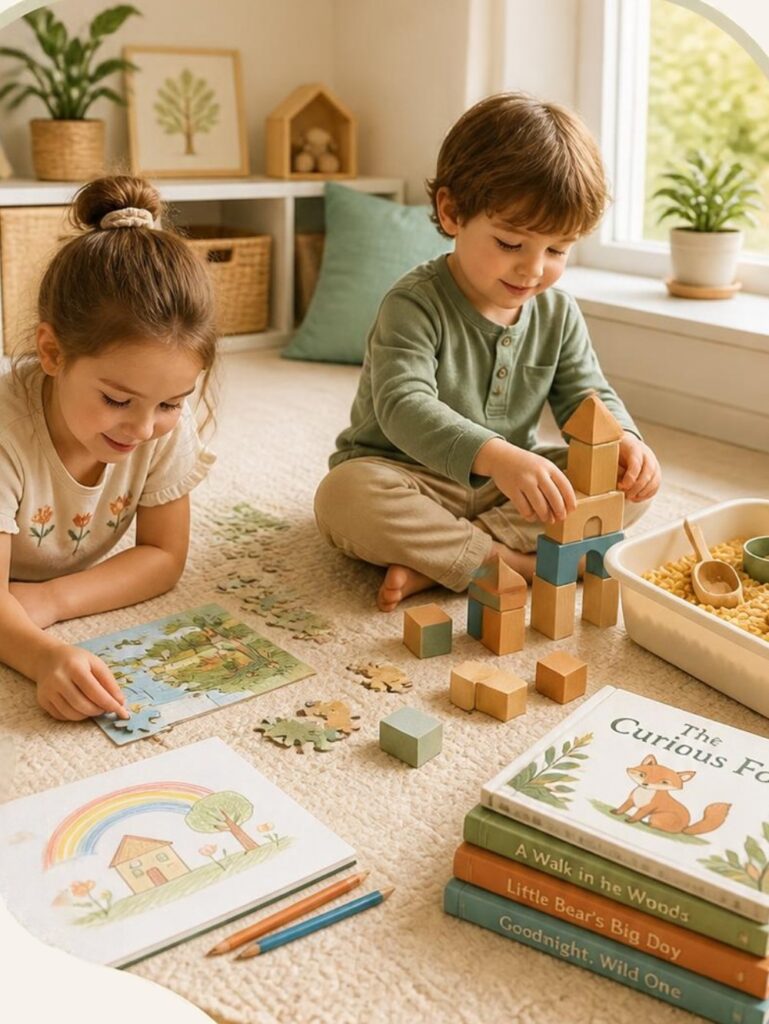
Puzzles are a wonderful way to encourage quiet, focused play while giving children something interesting to work on at their own pace.
Choose a comfortable spot with a small table, soft rug, or floor cushion. Keep a few age-appropriate puzzles nearby so children can easily choose one when they’re ready for a little downtime.
For younger children, wooden puzzles with larger pieces are a great place to start. Older kids may enjoy jigsaw puzzles featuring animals, nature scenes, or favorite characters.
There’s no need to finish a puzzle in one sitting. Sometimes the simple process of finding pieces and watching a picture come together is the most enjoyable part.
Simple idea: Keep one puzzle available at a time to make the activity feel inviting without creating too much visual clutter.
2. Build Something With Wooden Blocks
Building blocks offer endless opportunities for creativity without requiring complicated instructions or a lot of materials.
Children can create towers, houses, bridges, or imaginative little worlds using just a handful of blocks.
Set out a small basket of wooden blocks on a rug or low table and let your child decide what to build. Some children enjoy following a simple design, while others prefer experimenting and creating something entirely their own.
Building activities can encourage problem-solving, imagination, and fine motor practice while allowing children to work independently or alongside a parent.
Simple idea: Try offering a gentle building prompt, such as “Can you build a little house for your favorite toy?” Then let your child take the lead.
3. Explore a Simple Sensory Bin
A small sensory bin can be an inviting way for children to explore different textures and enjoy hands-on play.
You don’t need an elaborate sensory table or expensive supplies. A shallow container filled with age-appropriate materials can provide plenty of opportunities for scooping, sorting, and imaginative play.
Consider using larger sensory materials, soft fabric pieces, or other child-safe items that suit your child’s age and interests. Add a few cups, scoops, or favorite toys to encourage exploration.
Some children enjoy the repetitive motion of filling and emptying containers, while others like creating little pretend-play scenes.
Sensory preferences vary, so let your child choose which textures feel comfortable and enjoyable.
Simple idea: Keep sensory activities small and manageable. A single container and a few simple tools are often enough.
Safety note: Choose materials appropriate for your child’s age and abilities, avoid small items that could present a choking hazard, and supervise sensory play as needed.
4. Make Time for Drawing and Coloring
Sometimes a few crayons, colored pencils, and a blank sheet of paper are all children need for a peaceful creative activity.
Drawing and coloring give kids the freedom to express their ideas without worrying about following rules or creating something perfect.
Set up a small art basket with paper, washable crayons, colored pencils, or other favorite supplies. Keeping everything together makes it easier for children to begin an activity independently.
You might offer a simple prompt, such as drawing a favorite animal, a cozy house, or something they noticed outside that day.
Or simply let them create whatever comes to mind.
Simple idea: Keep a small selection of art supplies within easy reach so children can enjoy spontaneous creative moments throughout the day.
5. Settle In With a Favorite Book
Reading can be a lovely way to bring a little quiet into a busy afternoon.
Create an inviting reading spot with a soft blanket, comfortable pillow, and a small basket of favorite books.
Children who are learning to read may enjoy looking through picture books independently, while older children might prefer chapter books, nature guides, or stories about their favorite interests.
Reading together can also be a wonderful way to connect, especially after a busy school day.
And remember, quiet reading time doesn’t have to look the same for every child. Some children enjoy sitting curled up in a chair, while others prefer stretching out on the floor or listening to a story while holding a favorite comfort item.
Simple idea: Rotate a few books into your child’s reading basket each week to keep the space interesting without overwhelming it with choices.
Creating a Quiet-Time Routine That Works for Your Family
The most helpful quiet-time activities are often the simplest ones.
You don’t need a perfectly organized playroom, expensive toys, or a carefully planned schedule to create meaningful moments of calm.
Start by choosing one or two activities your child already enjoys. Keep the materials easy to access, allow plenty of flexibility, and remember that quiet time may look different from day to day.
For some children, that might mean working on a puzzle. For others, it might mean building a tower, exploring textures, or drawing a colorful picture.
The goal isn’t to make every afternoon perfectly peaceful. It’s simply to create a few opportunities for children to slow down, explore their interests, and enjoy being kids.
A little less pressure, a little more play, and a few quiet moments together can make an ordinary afternoon feel special.